Itinerari6 min read
Puglia in a Week: The Perfect Itinerary Based in Lecce
Discover how to explore the best of Puglia including the Valle d'Itria and Salento coastline while using the baroque jewel of Lecce as your home base.
by La Casita Lecce · Published · Updated
In brief
- Ideal Base: Lecce serves as the strategic hub for exploring both the Adriatic and Ionian coasts and the Valle d’Itria.
- Cultural Highlights: Key stops include the trulli of Alberobello, the whitewashed streets of Ostuni, and the cliffside views in Polignano a Mare.
- Coastal Destinations: Otranto and Gallipoli offer a mix of medieval history and pristine sandy beaches often compared to the Maldives.
- Local Cuisine: Must-try specialties include pasticciotto pastries in Galatina and traditional cartapesta art in Lecce's workshops.
Puglia is a long, diverse region that rewards slow travel. While many visitors feel the urge to move hotels every night, the most relaxing way to experience the 'heel of the boot' is to establish a base in the south and travel outward.
Lecce, often called the 'Florence of the South,' is the ideal hub. It offers a sophisticated urban atmosphere, incredible dining, and a central location that places both the Adriatic and Ionian seas—as well as the famous trulli villages—within easy reach. This itinerary balances the architectural wonders of the Valle d’Itria with the crystal-clear waters of the Salento.
Day 1: Arrival and the Baroque Splendor of Lecce
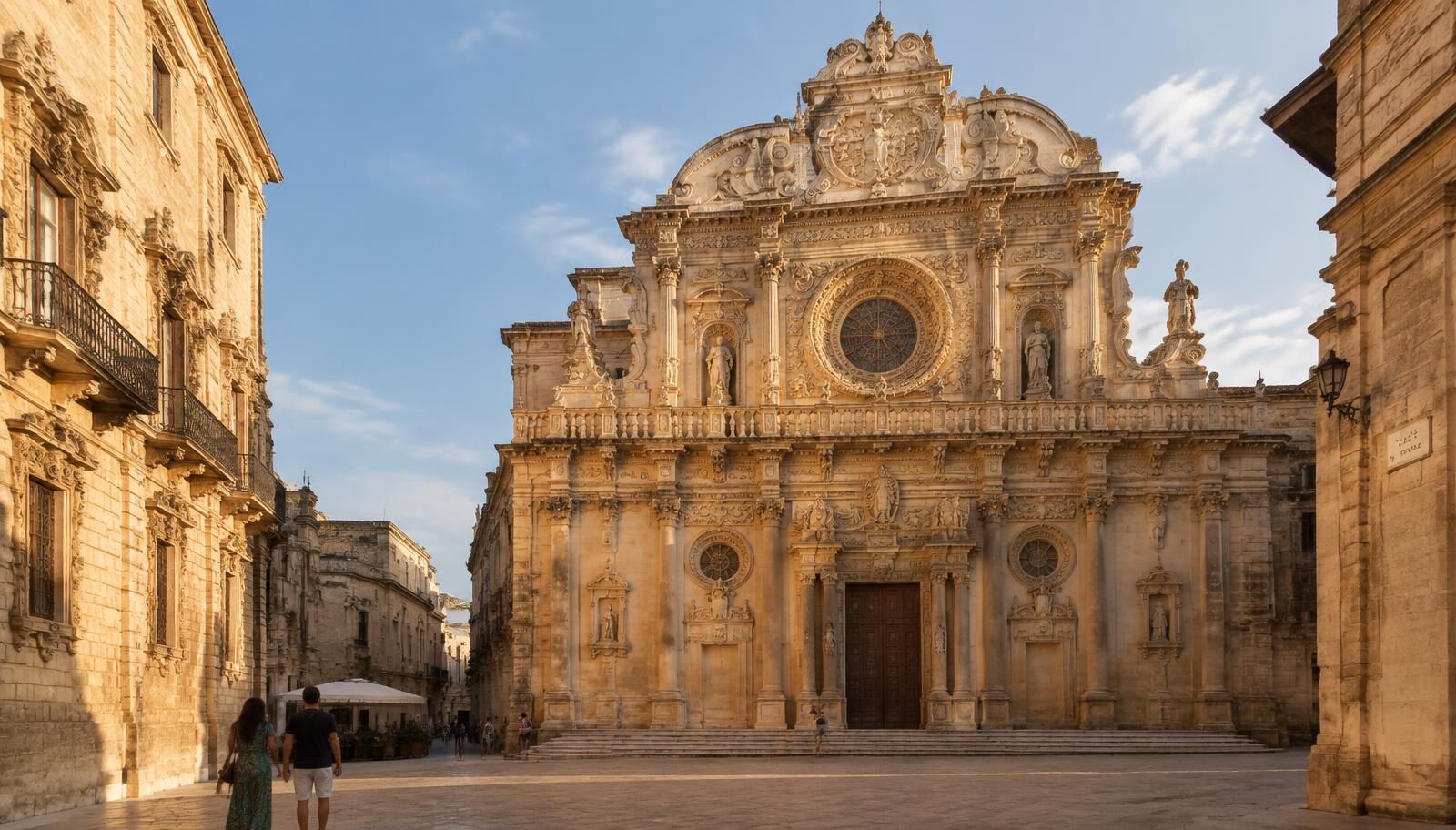
Start your journey by settling into the historic centre. Lecce is a city made of 'pietra leccese', a soft limestone that glows honey-gold at sunset. Spend your first day getting lost in the maze of narrow streets.
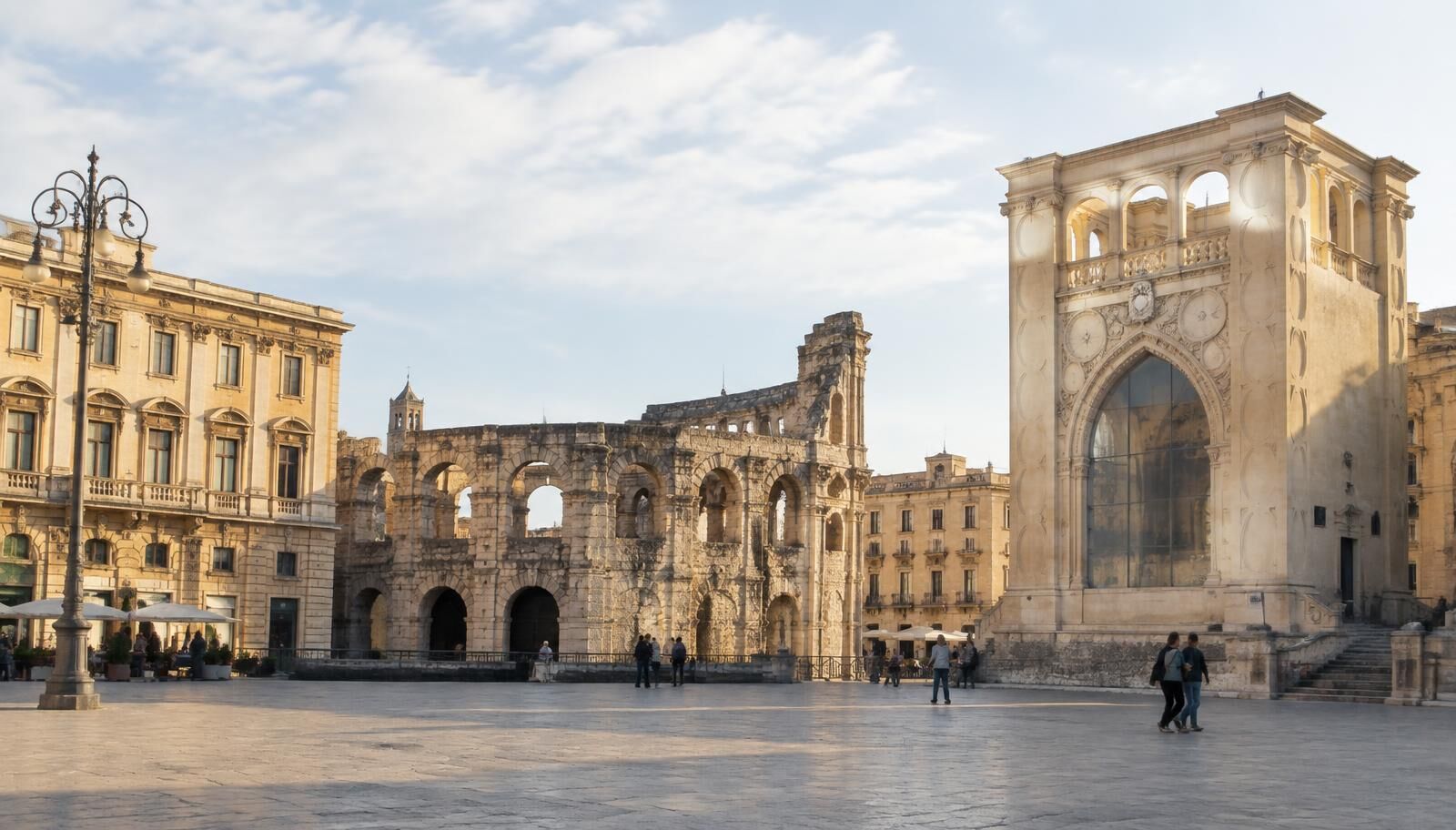
Must-see stops include the Basilica di Santa Croce, with its impossibly intricate facade, and Piazza del Duomo, one of the few 'closed' squares in Italy. As you walk, you will notice the city’s ancient roots at the Roman Amphitheatre, half-buried in the main square.
For a deep dive into the city's landmarks, check our guide on what to see in Lecce. In the evening, join the locals for a passeggiata along Via Liborio Romano before enjoying a glass of Negroamaro at a wine bar.
Day 2: The White City and the Trulli (Ostuni & Alberobello)
Heading north from Lecce, about an hour’s drive, you enter the Valle d’Itria. Your first stop is Ostuni, the 'White City.' Perched on a hill overlooking a sea of olive trees, its whitewashed houses and blue doors feel more Greek than Italian.
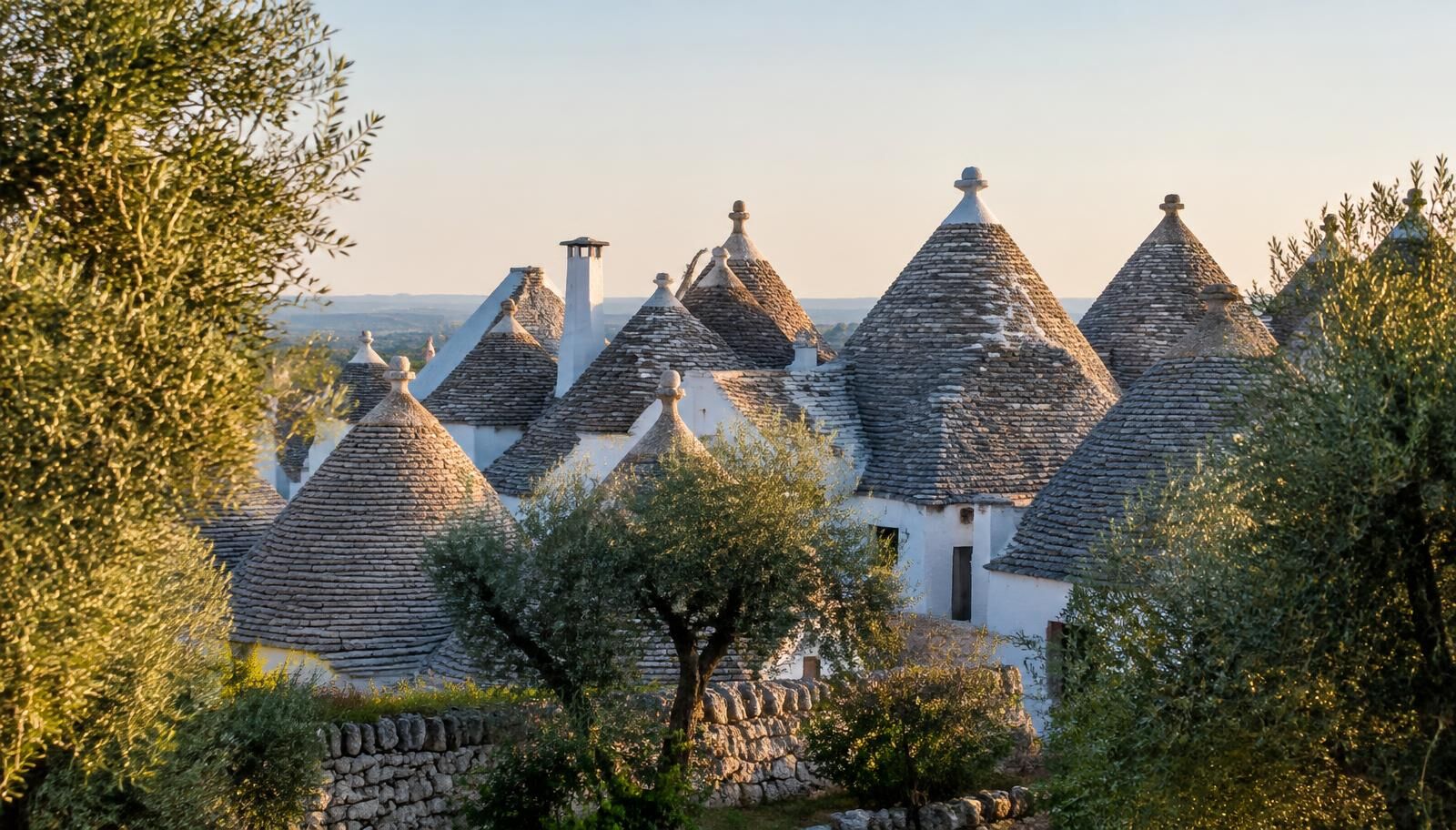
Next, drive another 30-40 minutes to Alberobello, a UNESCO World Heritage site famous for its trulli—conical-roofed limestone dwellings. While Rione Monti is the most famous district, head to Rione Aia Piccola for a quieter, more authentic atmosphere. These towns are among the most beautiful villages near Lecce and are easily visited in a single day trip.
Day 3: Coastal Gems (Polignano a Mare & Monopoli)
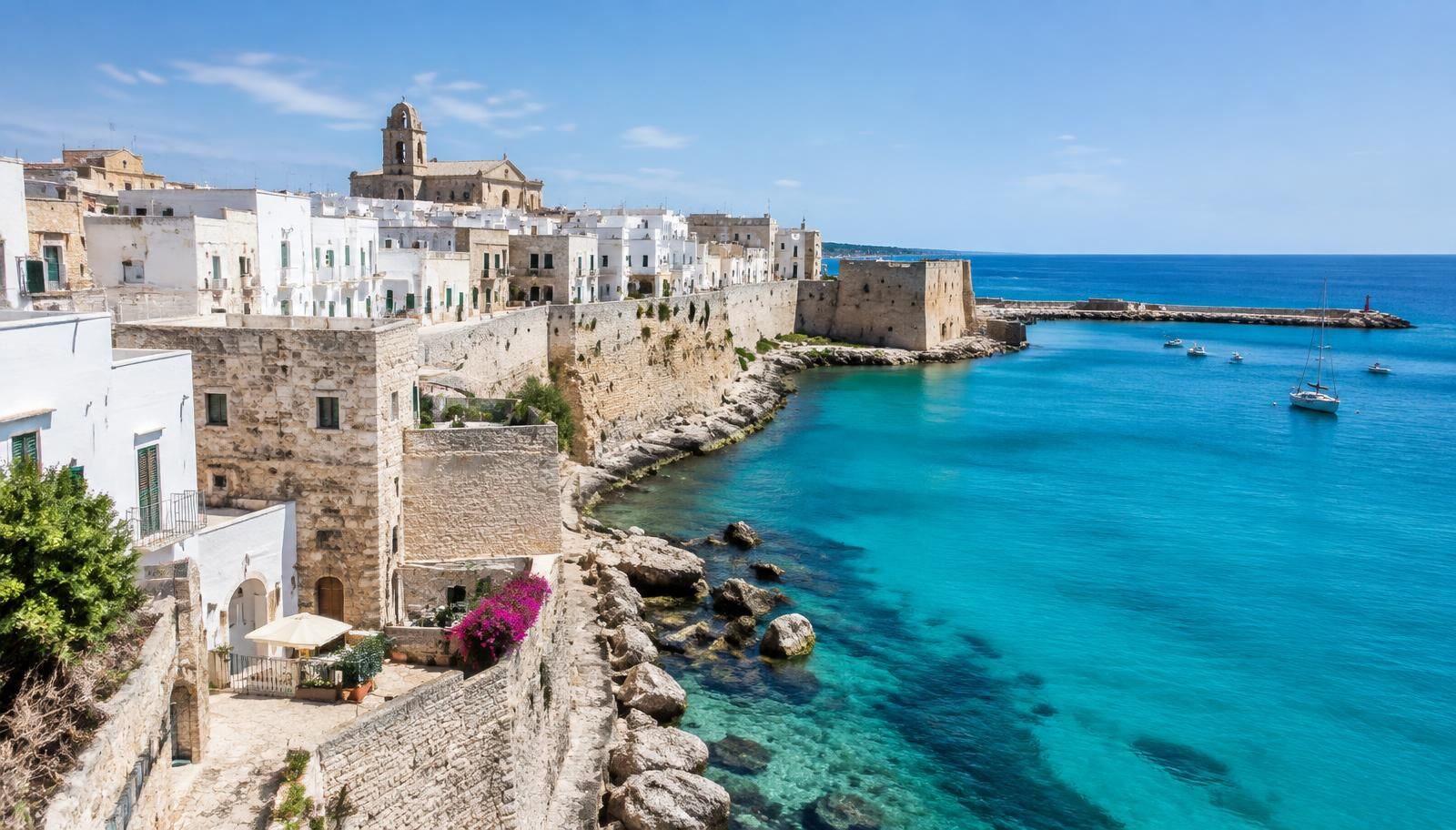
Further up the Adriatic coast lie two of Puglia's most photogenic towns. Polignano a Mare is built on limestone cliffs that drop vertically into the turquoise sea. The view from the Pietra Piatta rocks is iconic, looking back at the Cala Porto beach.
Just 15 minutes south is Monopoli. Unlike the more touristy Polignano, Monopoli feels like a working port town. Visit the Baroque cathedral and walk the perimeter of the old sea walls. If you have time, stop by the Abbey of San Vito on your way back toward Lecce.
Day 4: The Otranto Coast and the East
Drive about 40 minutes east from Lecce to reach Otranto, Italy’s easternmost city. The Cathedral of Otranto houses a 12th-century floor mosaic that is one of the most important medieval artworks in Europe.
After exploring the castle and the narrow alleys, head south along the coastal road toward Santa Maria di Leuca. This stretch of road is often compared to the Amalfi Coast but with far less traffic. Stop at the Zinzulusa Cave or take a dip in the emerald waters of Porto Badisco. If you prefer sandy shores, you can find some of the best beaches near Lecce just a short drive from the city limits.
Day 5: The Ionian Coast (Gallipoli and the 'Maldives')
On day five, switch to the western side of the peninsula. The Ionian coast is famous for its long, white sandy beaches and shallow turquoise waters.
Start in Gallipoli, an island-city connected to the mainland by a 16th-century bridge. The old town is a labyrinth of churches and courtyards. In the afternoon, head further south to the beaches of Pescoluse, nicknamed the 'Maldives of Salento.' The sunset over the Ionian Sea is a daily spectacle not to be missed before heading back to the Lecce city lights.
Day 6: Art, Crafts, and Local Flavors
After several days of driving, take a day to breathe and enjoy the lifestyle of the Salento. Use this day to explore the artisanal side of Lecce, specifically the cartapesta (papier-mâché) workshops that have been active since the 17th century.
Lunch is the perfect time to explore the local gastronomy. Look for ciceri e tria (pasta with chickpeas, partly fried) or a simple friseddha topped with sun-ripened tomatoes and local olive oil. For tips on the best local spots, see our guide on where to eat in Lecce.
Day 7: Galatina and Departure
Before heading to the airport or train station, make a final stop in Galatina, just 20 minutes south of Lecce. It is home to the Basilica of Santa Caterina d’Alessandria, which features breathtaking frescoes that rival those in Assisi.
Galatina is also the birthplace of the pasticciotto leccese, a shortcrust pastry filled with lemon custard. Eating one warm from the oven at Pasticceria Ascalone is the traditional way to say goodbye to the Salento.
Where to Stay in Lecce
To make the most of this itinerary, staying within the historic walls is essential. It allows you to enjoy the evening atmosphere of the illuminated squares without worrying about parking or transport.
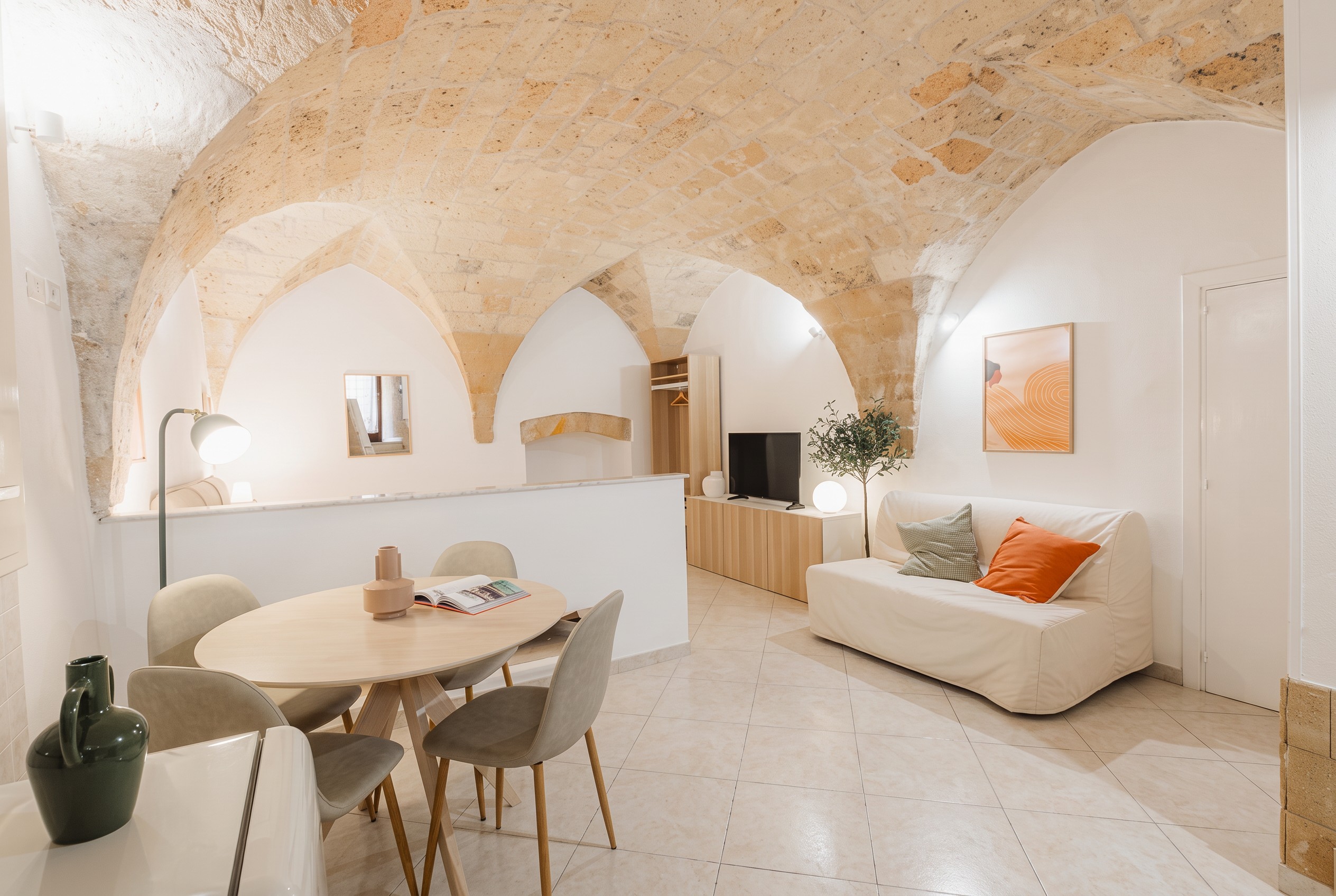
La Casita offers an authentic experience of local architecture, featuring the traditional star-vaulted stone ceilings typical of the region. Located in the quiet streets of the historic centre near Porta Napoli, it serves as a peaceful retreat after a day of exploring the wonders of Puglia.
Frequently asked questions
Is Lecce a good base for exploring Puglia?
Yes, Lecce is the ideal central hub for the Salento region. Its location allows you to reach both the eastern and western coasts in under 45 minutes, while also being close enough for day trips to the Valle d’Itria villages.
How many days should I spend in Lecce?
A full week is recommended to balance sightseeing in the city with day trips to nearby towns like Ostuni, Otranto, and Gallipoli. Spending at least one full day exploring Lecce's Baroque architecture and craft workshops is essential.
Do I need a car for a Puglia itinerary based in Lecce?
While Lecce is well-connected by train to some towns, a car is highly recommended for this itinerary. It provides the flexibility to visit coastal spots like Porto Badisco and rural trulli areas that are difficult to reach via public transport.
What are the best beaches near Lecce?
The Ionian coast features the famous sandy beaches of Pescoluse, known as the 'Maldives of Salento.' For rocky coves and emerald water, the Adriatic coast near Otranto and the Zinzulusa Cave offer spectacular swimming spots.
- #Puglia Itinerary
- #Valle d'Itria
- #Salento Beaches
- #Lecce Base
- #South Italy Travel
La Casita Lecce
Discover La Casita
An apartment with vaulted Lecce-stone ceilings in the heart of the old town, at Via Idomeneo 31C, a short walk from Porta Napoli. The ideal base to explore Lecce on foot.
You might also like
Itinerari7 min read
Lecce in 2 Days: The Ultimate Weekend Itinerary
Experience the best of the 'Florence of the South' with our curated 48-hour guide, covering baroque masterpieces, hidden courtyards, and authentic Salentine flavors.
Itinerari7 min read
The Most Beautiful Villages to Visit Near Lecce: A Salento Road Trip
Discover the hidden gems of the Salento peninsula, from the white-washed streets of Galatina to the dramatic sea cliffs of Castro.
Cosa vedere7 min read
Exploring Lecce: A Complete Guide to the Florence of the South
Discover the golden baroque facades and ancient ruins of Lecce, from the intricate Santa Croce to the hidden history of the Museo Faggiano.
La Casita Lecce