
In brief
- Lecce's Baroque Architecture: Known as 'Florence of the South,' the city features unique buildings carved from soft, honey-colored pietra leccese limestone.
- Major Landmarks: Must-see sites include the 2nd-century Roman Amphitheatre, the ornate Basilica di Santa Croce, and the enclosed Piazza del Duomo.
- Historical Gates: The old town is accessed through three monumental gates: Porta Napoli, Porta Rudiae, and Porta San Biagio.
- Cultural Heritage: The city is famous for the traditional 17th-century craft of cartapesta (paper-mache) and the multi-layered history found at Museo Faggiano.
Lecce is a city that demands a slow pace. Often called the "Florence of the South," it earns this title not by imitation, but through its unique Barocco Leccese. Carved from the soft, honey-colored local limestone known as pietra leccese, the city’s architecture glows under the Mediterranean sun.
Walking through the old town feels like wandering through an open-air museum, where every balcony and doorway is adorned with stone cherubs, flowers, and mythical beasts. This guide covers the essential landmarks and hidden treasures that make Lecce one of Italy's most captivating destinations.
The Heart of the City: Piazza Sant'Oronzo
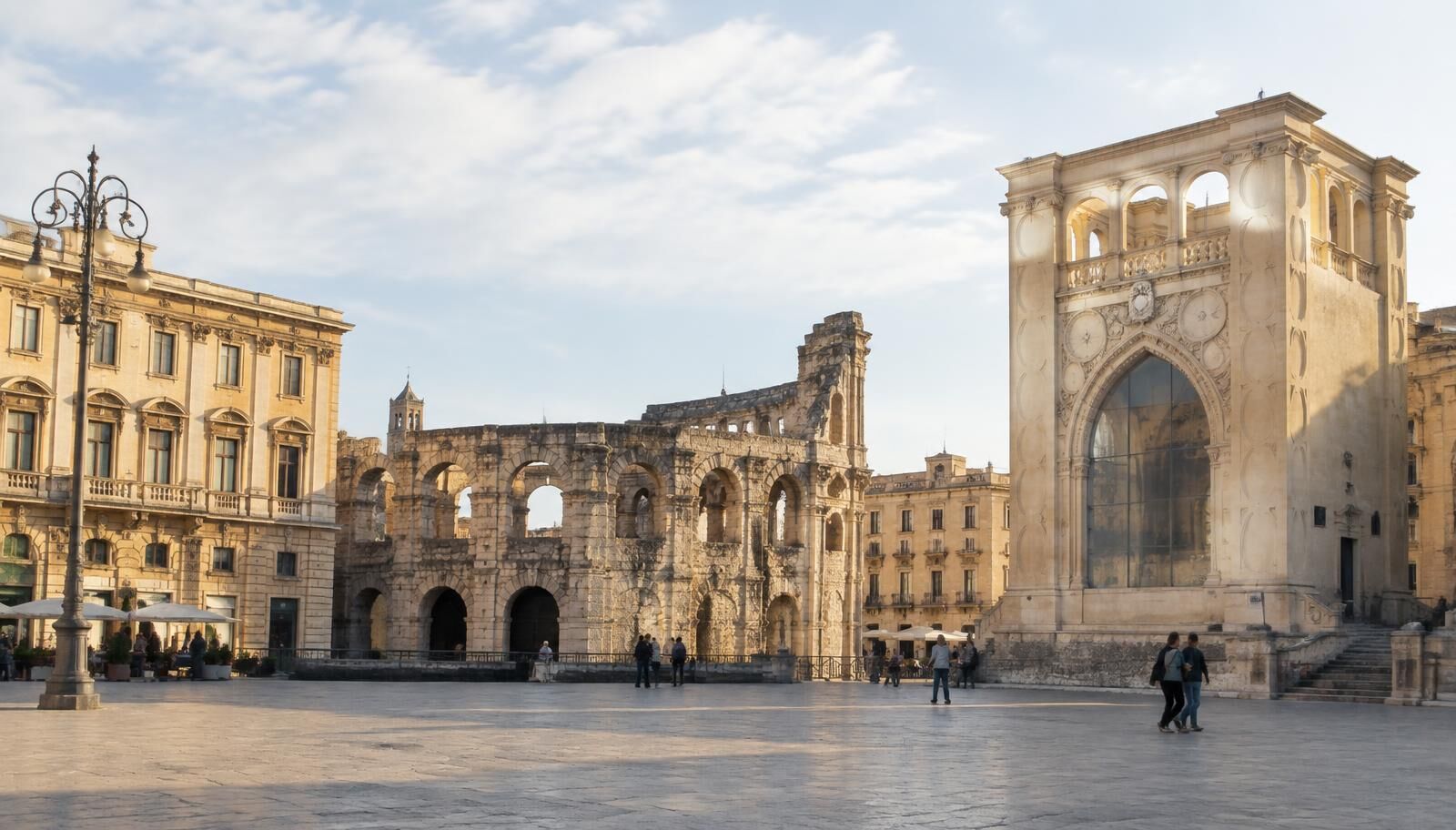
Your journey usually begins in Piazza Sant'Oronzo, the city's main square and a fascinating crossroads of eras. Here, the modern pulse of the city meets layers of ancient history.
The Roman Amphitheatre
Dominating one side of the square is the Roman Amphitheatre. Dating back to the 2nd century AD, it was only rediscovered in the early 1900s during construction work. Today, about half of the original structure is visible, while the rest remains buried beneath nearby buildings. In its heyday, it could hold around 25,000 spectators. Today, it serves as a dramatic backdrop for summer concerts and events.
The Column of Sant'Oronzo
Towering over the square is the bronze statue of Sant'Oronzo, the city's patron saint. The column itself has a storied past; it was gifted by the city of Brindisi, using one of the original Roman columns that marked the end of the Appian Way. It was erected here to thank the saint for allegedly protecting the region from the plague in 1656.
The Masterpiece: Basilica di Santa Croce
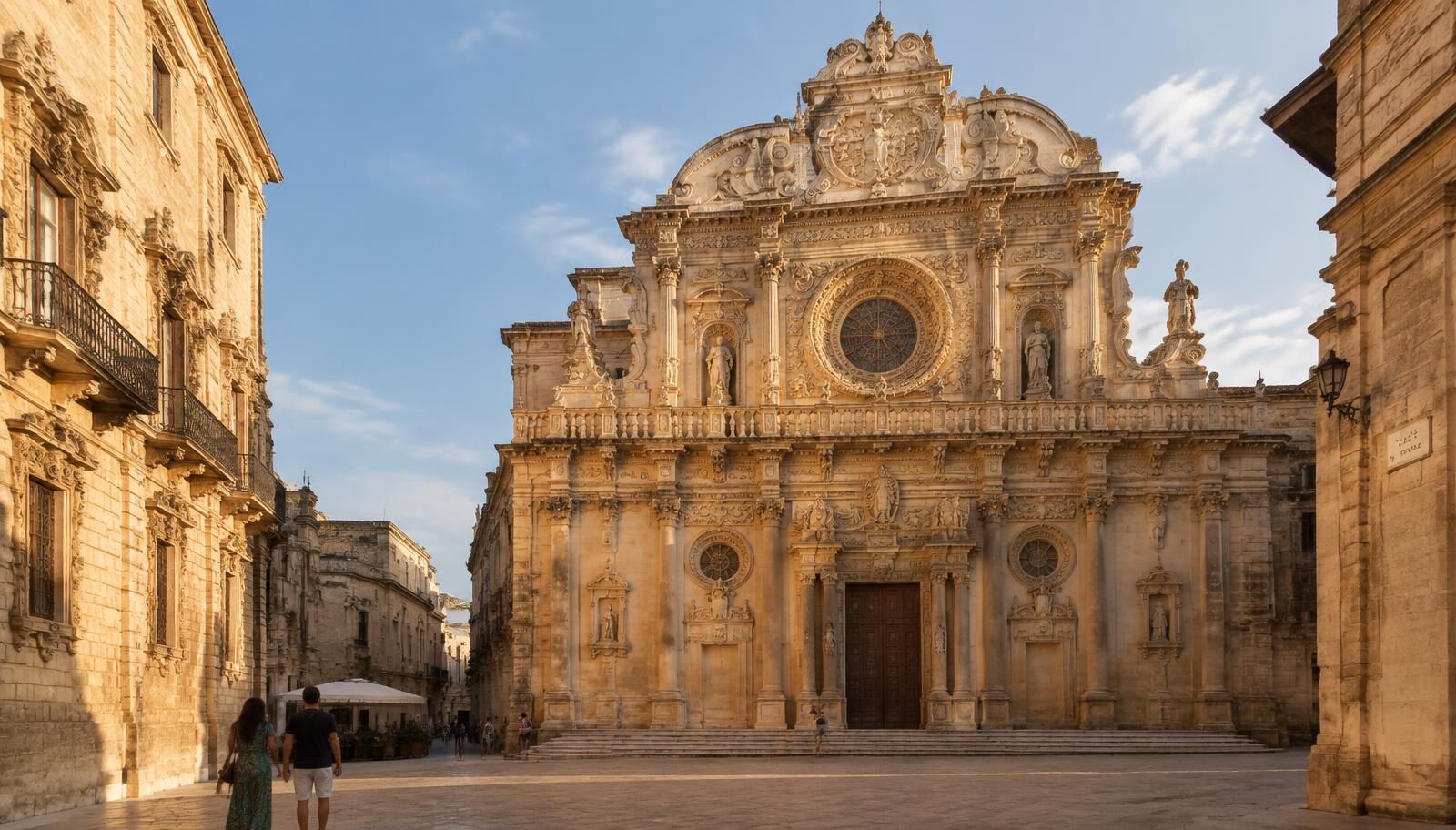
If you only see one building in Lecce, let it be the Basilica di Santa Croce. This is the pinnacle of Lecce's Baroque movement. The facade is an explosion of detail that took over 150 years to complete, involving master architects like Giuseppe Zimbalo.
Look closely at the facade to spot lions, eagles, griffins, and even Turkish prisoners supporting the heavy cornice. The central rose window is a masterpiece of stonework, surrounded by delicate floral patterns. While the exterior is overwhelming, the interior offers a grand sense of space with its high wooden ceiling and richly decorated side altars.
Adjacent to the Basilica is the Palazzo dei Celestini, formerly a monastery and now the seat of the provincial government, which shares the same elegant limestone aesthetic.
Piazza del Duomo: An Enclosed Masterpiece
Unlike most Italian squares that open onto several streets, Piazza del Duomo is a rare example of a "closed" square. Historically, it had a single entrance that could be gated at night, creating a grand private courtyard for the religious authorities.
The Cathedral and the Bell Tower
The Duomo (Cathedral of Santa Maria Assunta) features two facades: a sober one facing the entrance and a highly ornate one facing the square to welcome visitors. Next to it stands the five-story bell tower, one of the tallest in Europe, offering views that reach the Adriatic Sea on clear days. The square is also home to the Episcopal Palace and the Seminary, which features an internal courtyard with a famously ornate well.
The Gateway to the Old Town
To enter the historic centre of Lecce, you will likely pass through one of its three remaining monumental gates. Each has its own distinct character:
- Porta Napoli: Located near the Obelisk, this is the most grand entrance, built in 1548 in honor of Charles V. It resembles a Roman triumphal arch.
- Porta Rudiae: To the west, this gate is topped with statues of the city’s legendary founders and its patron saints. It leads toward the site of the ancient city of Rudiae.
- Porta San Biagio: Facing the southern part of the city, this gate is dedicated to Saint Blaise and leads into some of the liveliest streets for evening walks.
Hidden Gems and Curious Finds
Chiesa di San Matteo
While Santa Croce is the most famous, the Church of San Matteo is equally fascinating. Its facade is unique for its use of convex and concave curves, a style influenced by the Roman architect Borromini. Inside, the twelve statues of the Apostles are some of the finest examples of local stone carving.
Museo Faggiano
Located on Via Ascanio Grandi, the Museo Faggiano is a testament to the layers of history beneath Lecce's streets. What started as a private home renovation by Luciano Faggiano turned into a massive archaeological dig. As he broke through the floor to fix a sewage pipe, he discovered Messapian tombs, Roman granaries, Franciscan chapels, and Templar etchings. It is a vertical journey through 2,500 years of history.
The Art of Cartapesta (Paper-Mache)
As you walk between the landmarks, you will notice many artisan workshops. Lecce is world-renowned for cartapesta. This tradition began in the 17th century when marble was too expensive and heavy to transport. Local artisans discovered they could create lifelike, lightweight religious statues using paper, glue, and straw. Today, you can still watch masters at work, using the same ancient techniques to create everything from sacred icons to modern art.
Practical Tips for Your Visit
Lecce is a city best explored on foot. Most of the main attractions are within a 15-minute walk of each other. If you are planning a longer stay, Lecce makes an excellent base for exploring the nearby beaches of the Adriatic and Ionian coasts.
For those with limited time, it is possible to see the highlights in two days, but staying longer allows you to experience the city when it truly comes alive: during the evening passeggiata. As the sun sets, the limestone turns a deep gold, and the locals fill the streets to eat and drink before the lively nightlife begins.
Where to Stay in the Heart of Lecce
To truly feel the soul of the city, staying within the historic walls is essential. The quiet lanes near Porta Napoli offer a peaceful escape while being only steps away from the vibrant cafes and monuments.
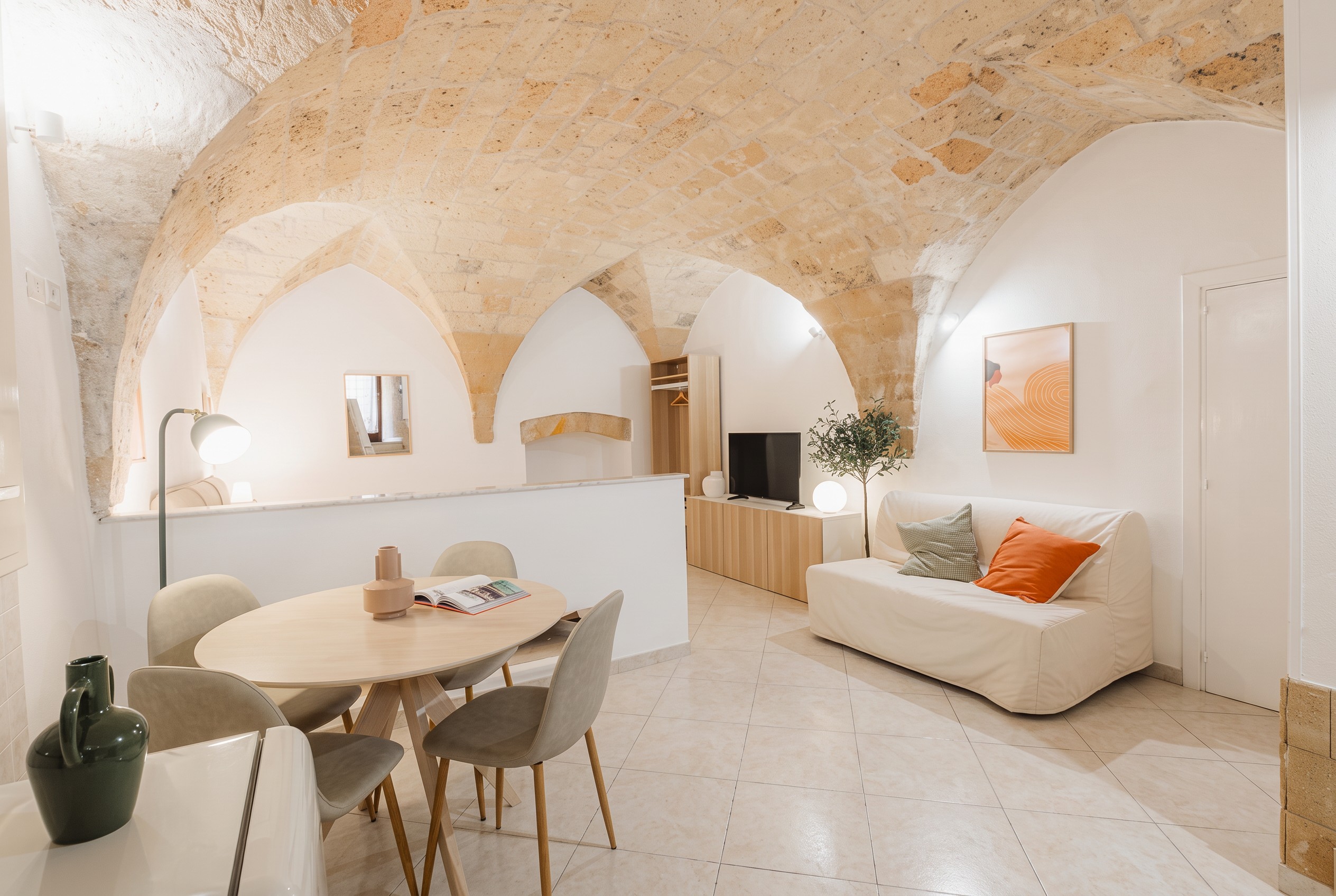
La Casita is a charming holiday home located on Via Idomeneo, right in the heart of the old town. Featuring traditional stone vaulted ceilings and a cozy, authentic atmosphere, it serves as the perfect sanctuary for those looking to immerse themselves in the local culture. From here, you are perfectly positioned to explore all the sights mentioned in this guide, returning home to the quiet elegance of a traditional Lecce residence.
Frequently asked questions
What is the best time to visit Lecce?
The best time to visit is during spring or early autumn when temperatures are mild for walking. Evenings are particularly beautiful year-round as the limestone buildings glow gold at sunset during the traditional passeggiata.
How many days do I need in Lecce?
Two days are sufficient to see the major historic highlights like the Cathedral and Santa Croce. However, staying longer allows you to use the city as a base for exploring nearby Adriatic and Ionian beaches.
Is Lecce walkable?
Yes, the historic center is mostly a pedestrian-friendly zone and all main attractions are within a 15-minute walk of each other. The city is best experienced slowly on foot to appreciate the intricate stone carvings.
What should I buy in Lecce?
Lecce is world-renowned for its cartapesta (paper-mache) art, a tradition dating back to the 17th century. You can purchase everything from traditional religious figurines to modern artistic sculptures from local artisan workshops.
- #Barocco Leccese
- #Salento
- #Historic Centre
- #Art and Culture
- #Sightseeing
La Casita Lecce
Discover La Casita
An apartment with vaulted Lecce-stone ceilings in the heart of the old town, at Via Idomeneo 31C, a short walk from Porta Napoli. The ideal base to explore Lecce on foot.
You might also like
Cosa vedere7 min read
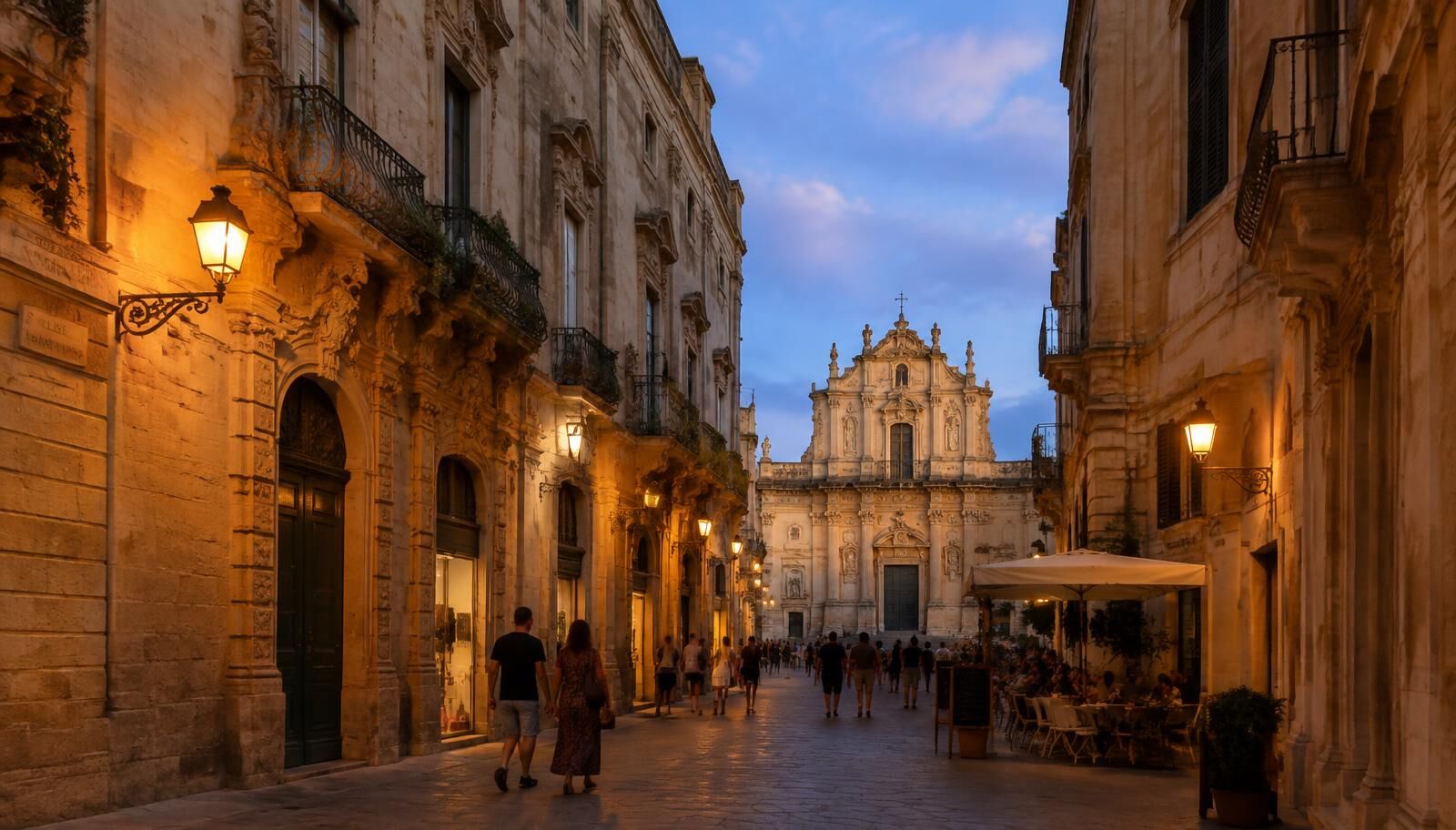
Lecce After Dark: A Local Guide to Evenings in the Baroque Capital
Discover the magic of Lecce at night, from the golden glow of its stone facades to the vibrant culture of the 'movida' in the heart of the historic centre.
Cosa vedere6 min read
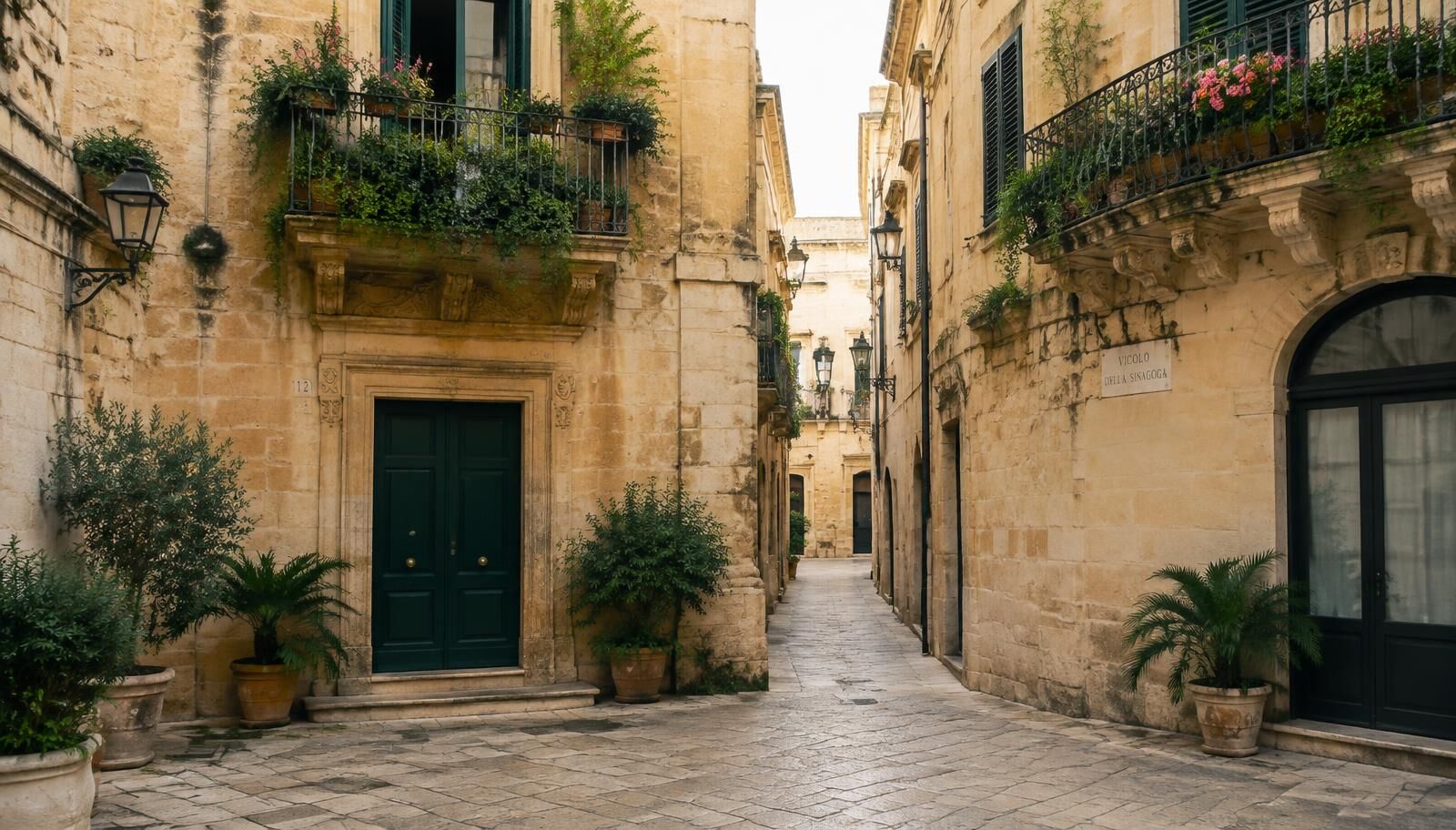
Exploring Lecce's Historic Centre: A Guide to Baroque Wonders and Secret Courtyards
Discover the golden soul of the 'Florence of the South' through a curated walk among honey-colored limestone churches, hidden courtyards, and ancient gates.
Itinerari7 min read
Lecce in 2 Days: The Ultimate Weekend Itinerary
Experience the best of the 'Florence of the South' with our curated 48-hour guide, covering baroque masterpieces, hidden courtyards, and authentic Salentine flavors.
La Casita Lecce